








Right to repair
On 31 August 2026, the domestic legislation transposing EU Directive (EU) 2024/1799 on the ‘Right to Repair’ (‘R2R’), namely Government Decree No. 114/2026. (VII.23.) (hereinafter: ‘Decree 114’).
What does this mean in practice? How should consumers’ right to repair and manufacturers’ obligation to repair be interpreted? Let’s go through these questions step by step!
What is the legislator’s aim with this new regulation?
The legislator’s aim with the new regulations was to support the realisation of the circular economy through consumer protection measures. The aim is to reduce waste; consumers should opt for repair rather than replacement when appliances break down, whether within or beyond the ‘guarantee’ period.
We place the term ‘guaratee’ in quotation marks throughout because, although it is commonly used in everyday language, no such term exists in Hungarian law. We therefore endeavour to describe precisely in each case which of the various ‘guarantee’ consumer rights is at issue.
In the EU legal guarantee and commercial guarantee exist. In the Hungarian laws we have to understand them as follows:
Legal guarantee may be: „kellékszavatosság”, „termékszavatosság” or „törvényi jótállás”; and Commercial warranty is: „kereskedői jótállás”.
In what circumstances does the right to repair arise?
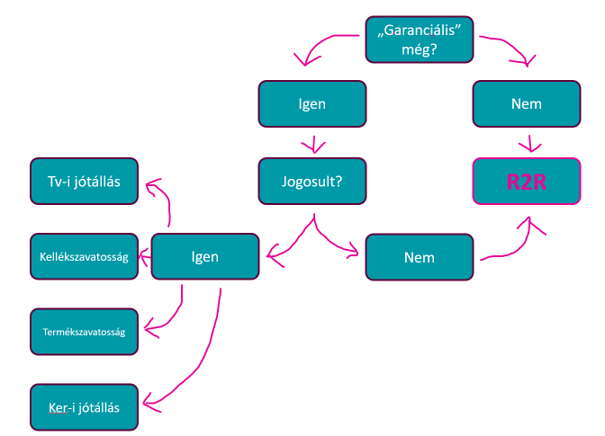
The right to repair applies to cases other than those of defective performance. Thus, it is available to the consumer in cases other than those covered by the ‘guarantee’ (be it legal or commercial).
In practice, the right to repair arises in two situations: either when the ‘guarantee’ period has already expired, or when the ‘guarantee’ cannot be enforced within the ‘guarantee’ period for some reason (e.g. because the fault arose for a reason attributable to the consumer).
From when does this apply?
The right to repair applies to consumers in respect of appliances purchased on or after 31 August 2026.
Who is responsible for the repair?
The manufacturer is responsible for the repair. If the manufacturer cannot be contacted, the order of liability is as follows:
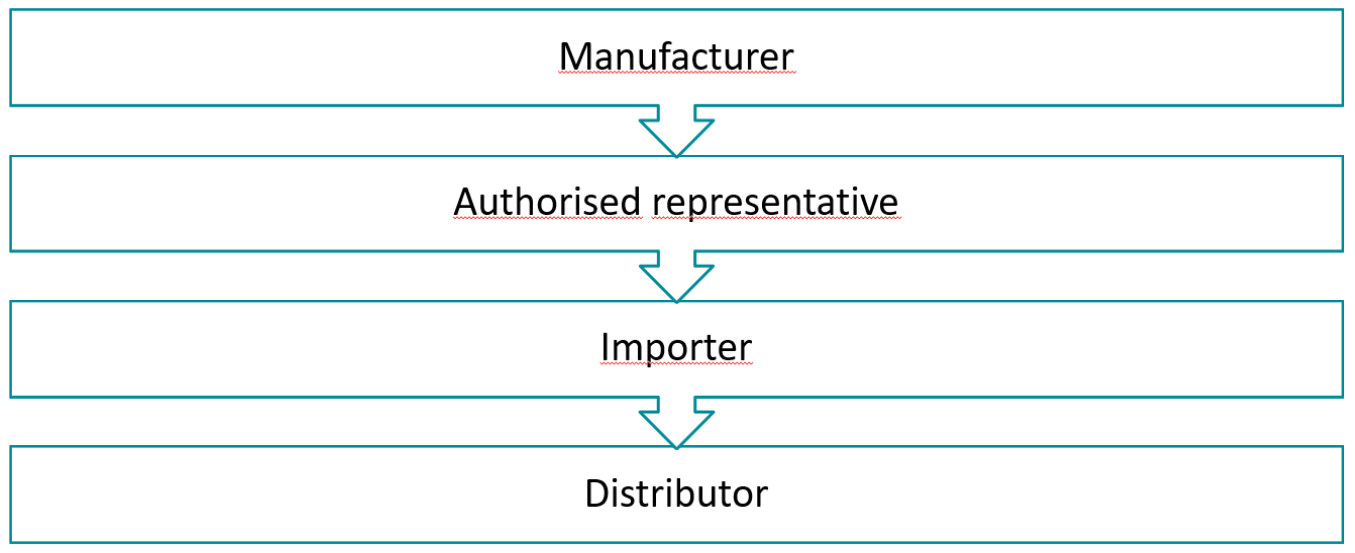
You can check who qualifies as a manufacturer and other parties in Regulation (EU) 2024/1781!
Which appliances does this apply to?
The right to repair does not apply to all appliances, only to those for which the new EU Ecodesign Regulation has already come into force.
As of 31 August 2026, these products are:
- 1. Washing machines, washer-dryers
- Dishwashers
- Refrigerators
- Electronic displays
- Welding equipment
- Vacuum cleaners
- Servers, data storage devices
- Smartphones, mobile phones, other cordless phones and tablets
- Tumble dryers
- Batteries and rechargeable batteries
- Space heaters
The range of products will expand in the future, as the EU legislator continues to define eco-design rules and repairability requirements for an ever-increasing number of appliances.
What are the repairability requirements?
These requirements are set out in the relevant EU Ecodesign Product Regulations for each product covered by the right to repair. Each regulation contains the so-called resource efficiency requirements in Annex 2. For many large household appliances, such as fridges, washing machines and dishwashers, these obligations on manufacturers have been in force since 1 March 2021.
These obligations include, for example, ensuring the supply of spare parts for a specified period.
Who is entitled to this?
The right to repair applies to consumers. However, it is very important to emphasise that, given that it imposes obligations on manufacturers beyond mere defective performance, micro, small and medium-sized enterprises are not considered consumers for the purposes of the right to repair.
What do you need to know about the European Repair Information Sheet?
Decree 114 allows repair services to fulfil their obligation to provide information to consumers by using this information sheet. However, this is not an obligation, but merely an option for repair services. The information obligations of repair services and manufacturers are set out in Government Decree No. 45/2014 (II.26.) on the detailed rules governing contracts between consumers and businesses.
When will the European Repair Platform be launched?
Decree 114 – and the EU Directive – provide for the establishment of the European Repair Platform. This will be a database of repairers, in which any repairer or service centre will be able to register on a voluntary basis. The EU legislator has set 31 July 2027 as the target date for the platform’s launch.
What does the ‘+12-month guarantee’ mean?
Regulation 114 also contains another very important provision, namely an amendment to Government Decree No. 373/2021 (30 June). Under this amendment, if, within the ’guarantee period’, namely ’kellékszavatosság’, the consumer opts for repair rather than replacement of the appliance, the ’kellékszavatosság’ is extended by 12 months.
This rule therefore applies to defective performance and to all types of appliances (i.e. not only those for which the right to repair applies). If an appliance breaks down during the legal guarantee, so that is in this case the ’kellékszavatosság’ the consumer may In that case, the consumer may exercise several of their consumer rights, as they choose not to have the appliance replaced but to have the faulty appliance repaired, they are entitled to an additional 12 months’ legal guarantee.
As this constitutes a case of non-conformity, micro, small and medium-sized enterprises are also classified as consumers.
However, it is important to note that it is not the ’törvényi jótállás’ (2 or 3 years) that is extended, but the ’kellékszavatosság’. This is 2 years; within this period, in the event of a dispute concerning the enforceability of the right, the burden of proof lies with the business during the first year (i.e. it is obliged to prove that the defect was not present in the appliance at the time of performance). After the first year, the burden of proof shifts to the consumer; therefore, in order to enforce their rights, they must prove that the fault already existed at the time of performance (i.e. when the appliance was purchased).
Where can I read Decree No. 114?
The decree can be read here (in Hungarian).